

















Another year at Gwynedd. The first bell rings, and students head toward their first period classes; but for the first time in years, there is not a phone in sight. Some students are relieved, but others are restless. The new no-phone policy arrived at Gwynedd, and let’s just say it brought very mixed emotions.
Like many other schools, Gwynedd mandated a no-phone policy for the 2025-2026 school year. It’s a simple rule: students cannot be on their phones at any time besides their lunch period. If students are caught using their phones outside of lunch, they will be given a demerit. When this policy first began, many students were not so happy about it. Considering we use our phones for attendance, certain classes, five-star, mobile serve, and more, it is understandable why students did not appreciate this new rule.
Now that we’re two months into the school year, opinions may have changed. Personally, the new phone policy has not affected me as much as I thought it would. I do think staff members should be more understanding of certain uses for the phone, but overall, it has helped me focus in my classes, and I think the general concept of the policy is beneficial towards both students and staff.
Teachers’ classroom experience has been disrupted by phone use for a long time. Naturally, many educators supported the introduction of the new phone policy. However, after speaking with several teachers, it became clear that some members of faculty hold more complex opinions on the policy. While some teachers assumed that there was going to be a strong pushback from students, many were surprised to find less resistance than anticipated. Overall, the teachers I spoke to agreed that the phone policy has been a positive change for faculty and students.
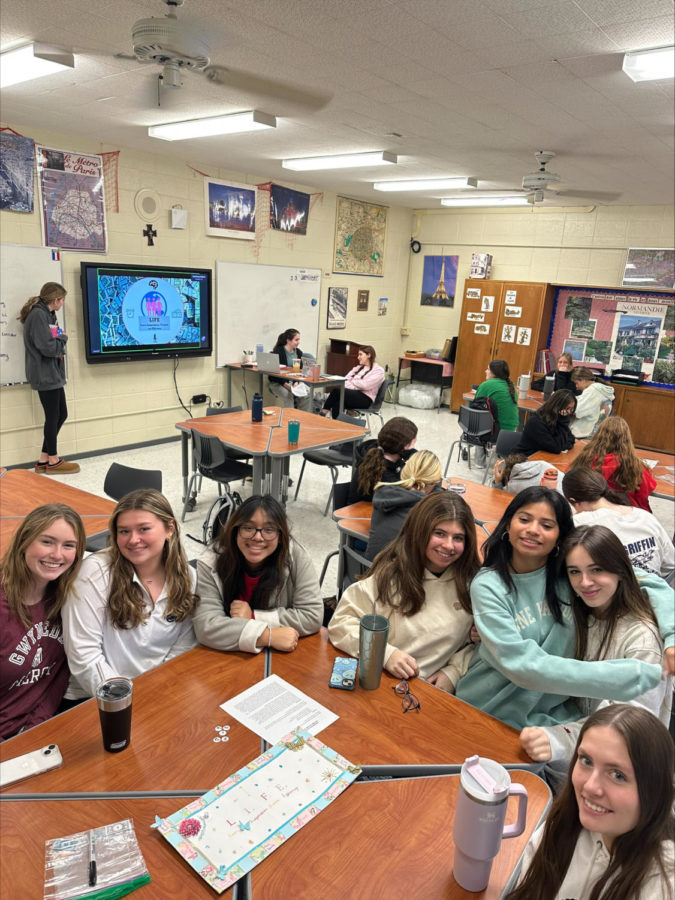
One teacher shares, “I have had no issues with it. I have noticed students being more present in school; their heads are up, they’re more conscious of their surroundings, no longer buried in phones, and they are using downtime for socializing instead of screen time” (Anonymous). Others expressed similar sentiments, emphasizing how the rule has improved classroom focus and daily interactions.
Still, a few teachers offered suggestions to strengthen the policy’s flexibility. “There are things that could be improved within the policy,” one teacher explained. “I think teachers should be able to allow phones at their discretion for projects and other school-related activities” (Anonymous). In the end, most teachers agree that the phone policy has made Gwynedd classrooms more focused and connected — but slight adjustments could make it even more effective.
Students, however, had a different initial reaction to the policy. Many were frustrated at first, since so much of the Gwynedd experience had previously incorporated phones. Between Saturn, Ruvna sign-ins, Outlook, and other school-related apps, phones had become part of students’ daily routine. As time passed, though, many adapted to the expectations and even noticed improvements in their focus and productivity, especially during WIN and CP.
Several students shared that they now feel less distracted and more present throughout the day. Still, others expressed that the policy has created new challenges. Many students once relied on their phones to check emails and schedules and losing that convenience has been an adjustment.
One student explained, “Even though I am more productive, I have been less organized. I liked having Outlook reminders and being able to send quick, easy emails from my phone. I wish there was something like a press pass that allowed me to quickly check my email or other things along those lines,” (Anonymous). Overall, while students have come to appreciate the benefits of the policy, they also recognize their desire for flexibility — small adjustments that could make the rule more practical without losing its purpose.
In conclusion, both students and teachers share similar opinions on the new phone policy. Each group recognizes noticeable improvements in focus, productivity, and the overall energy of the school environment. At the same time, both acknowledge that small changes could make the policy even better.
What’s most surprising is that the rule — once expected to spark backlash — has instead created a calmer, more connected atmosphere at Gwynedd. The phone policy has proven itself to be less of a controversy and more of a success, reminding the Gwynedd community that sometimes, putting our phones down helps us look up and engage a little more.