


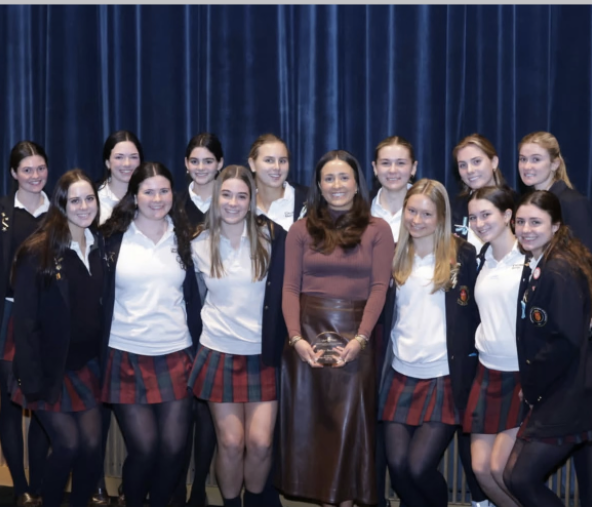


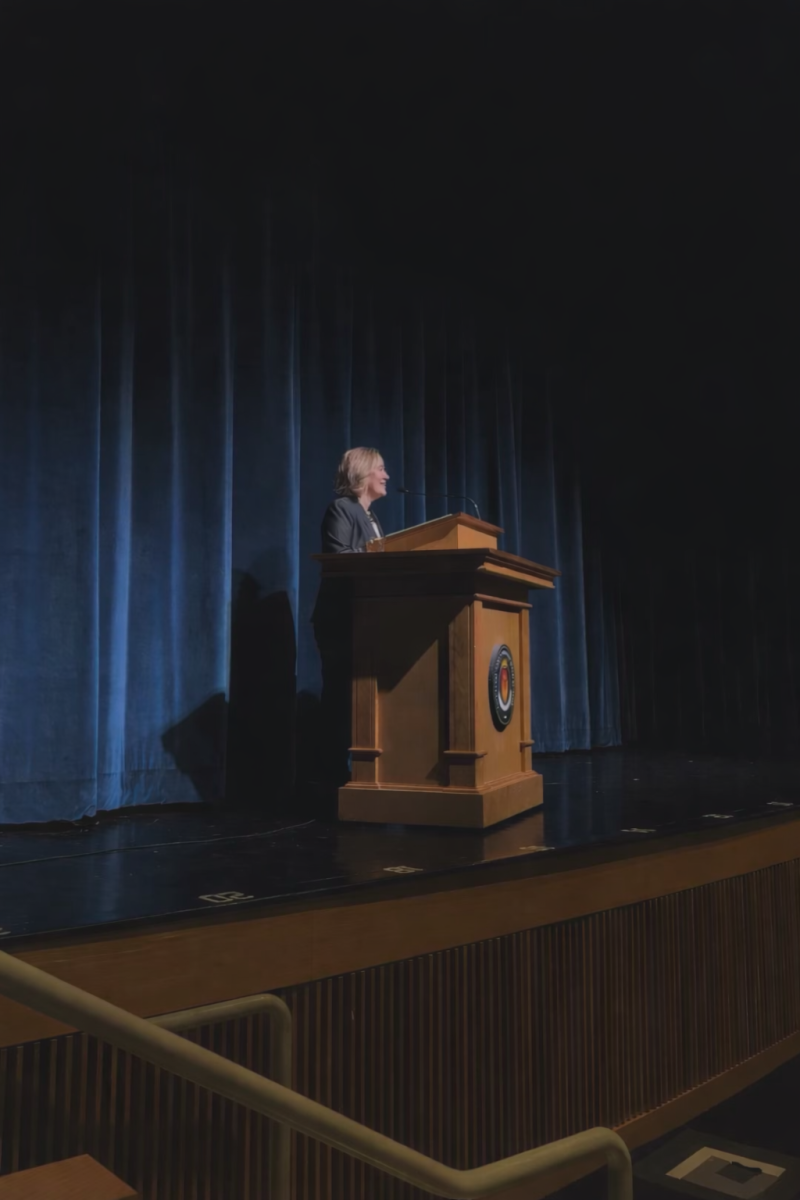










On February 4th, Gwynedd gathered for a Title IX assembly to celebrate National Women in Sports Day .Featuring Dr. Meghan Bishop ’03 and Hailey Durkin ’17, the assembly offered a first hand perspective on how Title IX continues to shape student-athlete experiences.
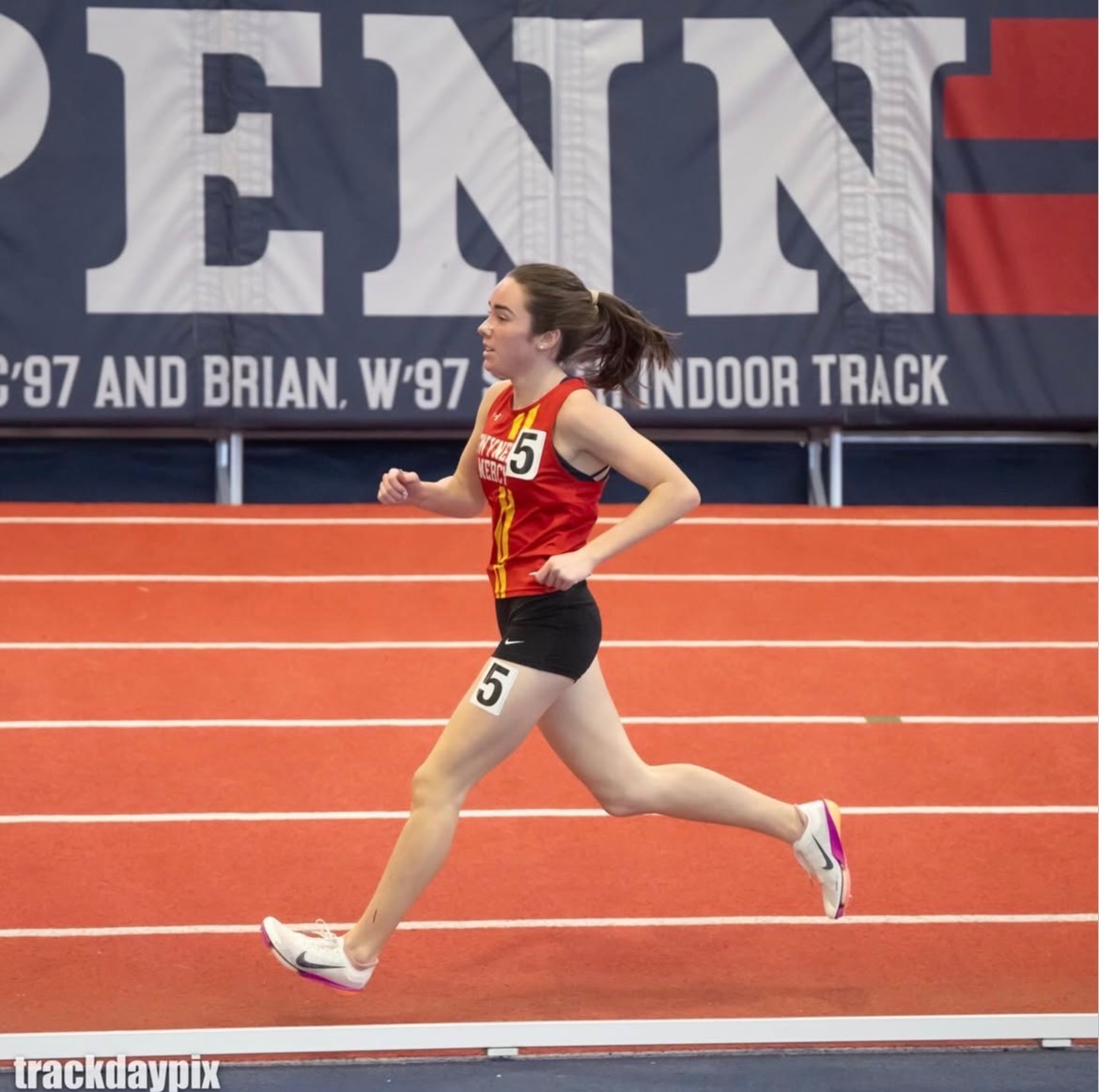
Dr. Meghan Bishop returned to campus not just as an alumna, but as a sports medicine surgeon with Rothman Orthopaedic Institute and a physician who works directly with high-level athletes. A record-setting runner at Gwynedd and later at the College of William & Mary, she qualified for the 2020 U.S. Olympic Trials before shifting her focus fully to medicine. Her résumé now includes serving as a team physician for organizations like the New York Knicks and the Philadelphia Phillies, along with work with collegiate programs and the Philadelphia Marathon. Still, her message to students wasn’t about prestige—it was about access. She explained how Title IX created the conditions that allowed her to compete, train seriously, and ultimately pursue a career connected to athletics. Without the respect and equity that has grown in women’s sports, her path could have looked very different. Her perspective made it clear that Title IX isn’t just a legal framework; it’s something that continues to affect who gets opportunities in athletics, medicine, and leadership.
Hailey Durkin ’17 returned to accept her initiation into the GMA hall of fame. As a four-year varsity starter in both lacrosse and field hockey during high school, she helped lead teams to major wins and collected her own long list of achievements, including over 100 career lacrosse goals and multiple honors. She went on to play Division I lacrosse at Fairfield University, where she was part of three MAAC Championship teams and made three NCAA Tournament appearances. Hailey kept her GMA roots and has come back to coach the varsity girls lacrosse team. The girls feel lucky as ever to have her as a role model. Rather than presenting her experience as a highlight reel, Hailey focused on what sports taught her: time management, accountability, and the ability to lead under pressure. She also spoke about how Title IX allowed her to compete at a high level all the way through college, and how those experiences still shape her professional life today.
What made the assembly effective was its tone. Both speakers treated it as something ongoing—something that still requires attention and advocacy. They acknowledged the progress that has been made in expanding opportunities for women and girls in athletics, but they also pointed out that equity isn’t automatic. Fair access to coaching, facilities, medical care, and recognition still depends on schools and communities actively supporting female athletes.
The conversation also broadened beyond sports. Title IX applies to educational environments more generally, and both speakers emphasized respect, safety, and equal opportunity as essential parts of any school culture. For students in the audience, the takeaway wasn’t just that Title IX exists, but that it continues to influence what opportunities are available and how those opportunities are experienced.
Overall, the assembly made it clear that Title IX’s impact spans generations. Our alumnae’s paths were different, but both were shaped by access to athletics and the confidence that comes with being supported in competitive spaces. The message was simple: equity in sports matters, it has tangible effects, and it’s something students should understand not as a distant policy, but as a part of their own educational environment.