












Two stories of gleaming white cobblestone. Ink colored accents engraved with intention. A blooming spread of flowers with colors bright enough to blind. The whistling breeze and luminous sunshine could make anyone believe heaven was on earth. This was a house like no other, and I was lucky to call it home — lucky until I wasn’t.
This house was a sanctuary. The kind of place I could be anyone I wanted to be. From the first step inside, everything opened up. The broad hallways and wide windows practically pulled the outside world in. The lights felt brighter and the air felt lighter, like nothing was trapped or crowded. Silence didn’t exist here — every room seemed to invite laughter in. Even its flaws felt right, like they represented the gentle rhythm of life. The house wasn’t perfect, but it was filled with love and pride. Its warmth lived in the imperfections — loud and messy, but free.
On a quiet Sunday afternoon, he walked through the door. A dull ray of light struck his stern face while his tired eyes met mine. He had bought rights to the house but agreed to let me stay as long as he could make some repairs. His keys jingled as he approached me, carrying neatly labeled boxes and huge stacks of paper. Even though I wasn’t thrilled about someone new moving in, I welcomed him with open arms. Keeping my lovely home to myself would have felt cruel. I was consumed by questions about the repairs, repeatedly asking myself why anyone would want to change such a wonderful thing.
A few days later, he gestured toward the foyer window — the one that never fully shut — and asked if I’d noticed. I laughed it off, reassuring him that it was harmless. The gap let the outside breathe into the house, and I’d always found that comforting. He didn’t seem to care. He wouldn’t take no for an answer, insisting on sealing the window for both of our safety. Eventually, I gave in and let him fix the window. After all, it was just a window, and he was just trying to help. To be quite honest, it felt nice having someone look out for my safety. He made me feel special.
In the following weeks, he continued to make subtle adjustments. Small things — things I hadn’t realized needed fixing. He added heavier locks to the doors, closed the curtains earlier, rearranged the furniture, and it was all to protect me. At least that’s what he told me. As grateful as I tried to be, these sudden changes began to get under my skin. I would come home to my light linen curtains replaced with blackout ones, my living room stripped of extra seats and color, and even my welcome signs quietly taken down. I appreciated his vigilance, but I just didn’t understand how any of this was keeping us safe. I mean…what was so dangerous about decorations?
No matter how many times I told him that the open windows and colorful decor were what made this place feel like home, he did not stop. My house began to feel hollow. A place that was once my safe haven, my favorite spot, now felt… regular. The light no longer hit the places it used to. In fact, it was rare for the house to be brightened by natural rays of sunlight at all.
Everything just seemed quieter. Barely anyone came by anymore. My friends, who once saw this house as a second home, now seemed to be avoiding it now. And he never listened to me either. He always reminded me that I was too young to have good judgement. So, every request, every suggestion, went in one ear and out the other. I knew he wasn’t doing anything malicious, but I began to feel a sense of discomfort — one that was completely unfamiliar.
As the house closed, so did my world. Everything I thought I knew, I began to question. I slowly stopped going out, stopped seeing my friends. Watching how many things he changed to keep us safe opened my eyes to how dangerous the world supposedly was. I had never feared my neighborhood, my town, or the world in general, but he showed me how dark it could all be. And maybe I had never experienced that darkness myself, but who was I to question him? He was smart, charming, and I knew he would do anything for me. I felt bothered by all of his repairs, but that feeling was overpowered by the fear of the world he had made me aware of.
One evening, just before sundown, I came home thrilled to hang up my new painting in my bedroom. I had been looking for that exact piece for years. It represented who I was as a person. As I was hanging it on the wall, I heard my door open. He asked me what I was doing. Excited, I told him I had finally found the painting I’d been looking for forever. He asked why I would buy such a foolish thing. I laughed and reminded him that I liked it. He stared at me blankly, then told me to go back and return it. He told me buying something so useless exposed how vulnerable I was. How careless I was. How dangerous a painting could be. He saw my face flush with disappointment. He smiled and reminded me that he was only protecting us.
My mind was flooded with worry. Not worry about the danger outside my home. Worry about doing something wrong — something that would upset him. When I made a mistake, like the painting, he never yelled or even raised his voice, but every word of criticism felt like a bullet. I started asking his opinion before doing anything, even stepping outside for fresh air. And even then, I was usually met with the same words: “People like us must be smarter than that.”
One day, we agreed that it would be fun for me to go out and see an old friend. But once I got there, I wished I hadn’t. She insisted that I had changed, all because of him. She complained that I never came out anymore, that I couldn’t seem to form an opinion of my own, that I feared anything different from what I was used to. I couldn’t deal with her. So, I went home.
On the way back, I thought about how right he sounded. Maybe I didn’t know enough. I told him what had happened, and he said that people like her just didn’t understand what it meant to be safe. And despite how much I had once loved my friend, I found myself agreeing with him. She just wasn’t like us.
I barely recognized my house anymore. But that was because I barely recognized myself. He had taught me things. Things that were supposed to protect me. Our house had changed, and so had I. But I told myself it was for the better.
He was out one afternoon, and I had been lying in my room. I started to get hungry, so I got up and walked towards my door. But it wouldn’t open. Confused, I laughed and tried again. Still nothing.
I froze. Then I panicked. Why was I locked in my room? I slid down and sat against the locked door, my hands shaking as I looked around. My room. It was awful. The wallpaper had been replaced with gray. My windows had been nailed shut. Even my outlets were gone. The only pop of color left was a photo of him. My heart pounded faster and faster. What had I become?
I frantically dug through my drawers and found the box of photos I had been hiding. I studied each picture, noticing every detail. My eyes were full of life. My smile was pure. I looked happy. I looked free.
The girl in those photos didn’t need protection. She didn’t even want it. I looked at my friends and saw them as just that — my friends. Not people who were less than me. Not people who put me in danger. They were just my friends. I thought hard.
And suddenly, I understood.
I wasn’t being protected. I was being kept.
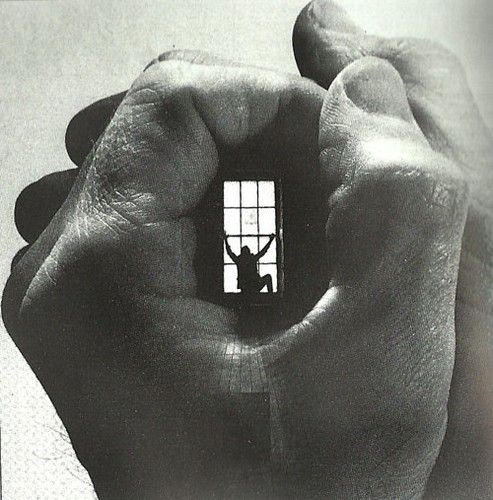
This house wasn’t a home. It was a cage.
He had taken over. I had been brainwashed. I was trapped. And I didn’t know where freedom existed anymore.
This is no house. This is my life.